
द कैलाश यात्रा
द कैलाश यात्रा
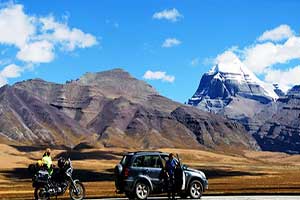
Four major faiths - Hinduism, Buddhism, Jainism, and Bon - come together at Mount Kailash. This mountain carries deep meaning for millions of people around the world. People see it as more than just rocks and ice. They view it as a living symbol of faith and spiritual power, especially for followers of Lord Shiva.
Mount Kailash stands tall in the remote corner of southwestern Tibet. The peak reaches 6,638 meters (21,778 feet) into the sky. Buddhists call it 'Mount Meru,' which means the center point of our world.
Can one mountain hold sacred meaning for multiple religions? The answer is yes! Mount Kailash serves as a spiritual center that draws worship from Hindus, Buddhists, Jains, and Bon followers.
What makes this peak so special? Let's explore why Mount Kailash ranks among the holiest places on our planet.
| Mount Kailash in Different Religions | Different Names of Mount Kailash | Spiritual Significance |
|---|---|---|
| Sanatan/Hinduism | Kailash Parvat | For Hindus, Kailash Parvat is the home of Lord Shiva and Maa Parvati, who live there with their Ganas. |
| Buddhism | Kangri Rinpoche/Gang Tise/Mount Meru | Buddhists believe it to be the abode of Demchok (Chakrasamvara) and his consort Vajarayana. |
| Jainism | Ashtapada | In Jainism, Rishabhnatha, the first Tirthankar of Jains, attained enlightenment at Kailash. |
| Yungdrung Bon/Bon | Yungdrung Gutsek | For Bons, Mount Kailash is home to the Goddess Sipaimen and the founder of religion, Tonpa Shenrab, who descended from heaven. |
People believe that gods live within the peaceful landscape around Mount Kailash. The mountain serves as a home for divine beings—Lord Shiva for Hindus, Demchok for Buddhists, and Rishabhanatha (a Jain Tirthankar) for Jains. Monks and sages seek wisdom here. Visitors often report feeling a powerful presence during their trips to this sacred place.
What gives this mountain such incredible power? Here's what sets it apart:
People call Kailash Mansarovar the 'Axis Mundi' or 'world's center.' This means it links the sky with the earth and keeps cosmic forces in balance. Tibetan teachings say Mount Kailash represents the endless cycle of life and death, the universe itself, and the journey toward wisdom. The area around Mount Kailash—with its lakes, valleys, hills, and monasteries—forms a huge natural pattern called a mandala. Mount Kailash sits right in the middle as a 'symbol of light.' This is why pilgrims take the Mount Kailash Yatra to honor this holy peak.
The Kailash Parvat Parikrama covers 52 kilometers around Mount Kailash. The journey starts and ends at a place called Darchen. Before walking around Mount Kailash, pilgrims circle three special structures called Chorten (Stupas) in Darchen. During the Mount Kailash Kora trek, you will see carved stones (mani stones), colorful prayer flags, yak skulls, and goats marked with holy words. At Tarboche, people put up a tall flagpole each year to mark the start of the Saga Dawa festival. This festival celebrates Buddha Shakayumani's birth, which falls on the full moon of the fourth month in the Tibetan calendar. Tibetan Buddhists visit monasteries during this time.
You can learn more about the differences, importance, nearby places, and other details about Kailash Parikrama—both the inner kora and outer kora.
| Aspects of Parikrama | Outer Kora | Inner Kora |
|---|---|---|
| Meaning | Starts from Darchen, and the first point of prostration is Chaktsalkhang | Also known as Nandi-Kora, meaning circumambulating the Nandi Parvat, crossing through the Serdung Chuksum Pass |
| Spiritual Significance | Beliefs say, performing Kailash Kora wards off any kind of negative karma | Pilgrims experience more profound energies with the combined energies of Nandi & Kailash |
| Starting & Ending Point of Parikrama | Darchen/Tarboche is the starting and ending point of the Mount Kailash Outer Kora | Performed only after completing Kailash’s outer parikrama that begins at Darchen |
| Trek Distance | 40 km | 34 km |
| Duration | 2-3 days | 1 day |
| Route |
Day 1: Darchen-first prostration point-Tarpoche (Yam Dwar)-Kangni Chorten-first tea house-Chuku Gompa Monastery- Dirapuk Monastery (North face of Kailash) Day 2: Dirapuk Monastery to Zuthulpuk-back to Darchen |
After Day 2, Trek from Darchen for inner parikrama and return (18 km, 10 hours) after completing the outer kora only Darchen-Serlung Monastery-inner region of Mt. Kailash-13 Golden Chortens & Saptarishi Caves-Nandi Pass-Serlung Monastery-Gyangdrak Monastery-Darchen |
| Level of Difficulty | Moderate | High (involves trekking in rugged terrains and rocky plains to reach the innermost region of Kailash) |
| Places to Explore | Zuthulpuk Monastery, Dhirapuk Monastery, Dolma La Pass, Tarboche | Saptarishi Caves, Nandi Parvat, Sherlung Monastery, Kuber Kund, Gyangdrak Gompa |
| Visible Face of Kailash | North Face | South Face |
Mount Kailash keeps many secrets. Not everyone knows these mysteries, so here are some interesting facts about Kailash Parvat that will surprise you:
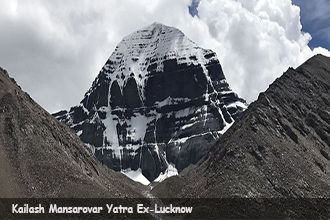
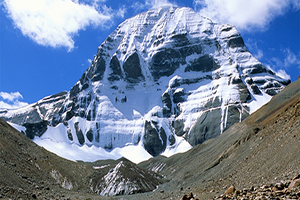
Most mountain peaks come to a sharp point at the top. Mount Kailash looks different. It has a pyramid shape with balanced sides. The mountain looks like a giant Shiva lingam sitting in the middle of a lotus flower pattern made by nearby mountains. People compare it to a temple, stupa, or cathedral, and see it as a source of knowledge and cosmic power. These lotus-shaped mountains also form what looks like an argha (a special vessel) for the Shiva linga.
Four major rivers—the Indus, Sutlej, Brahmaputra, and Karnali—start from the Kailash Himalayan range. People consider these rivers holy because they support human life and provide water to millions of people across Asia, beginning from the Kailash region.
Many travelers notice something strange during their Kailash Mansarovar Yatra. Their nails and hair grow much faster than normal—all within just 12 days of the trip. Scientists think this happens because of how time works differently here and the unique geographical location of Kailash Mansarovar.
Mount Kailash remains one of the few mountains no one has climbed. Since four religions—Hinduism, Jainism, Buddhism, and Bon—consider it sacred, climbing this mountain is not allowed. Only Milarepa, a Tibetan spiritual teacher from long ago, is said to have reached the top.
If these amazing secrets of Mount Kailash interest you, plan your Kailash Mansarovar Yatra soon. You can call or WhatsApp us at +919958647371 for questions and travel advice about Mount Kailash Yatra.
9 Night 10 Days
10 N/11 D
13N/14D
14 Nights / 15 Days
